Editorially reviewed and updated for Canadian readers.
The Mystery Solved: Why Magic Mushrooms Turn Blue can be difficult to research because search results often blend personal stories, commercial language and scientific findings. This guide separates practical facts from assumptions, explains the vocabulary readers are likely to encounter, and highlights the safety questions that deserve attention before any decision is made.
The central themes are product labels, individual variability, timing, storage, responsible planning and the limits of online advice. Rather than promising a universal outcome, the article uses a decision framework: identify what is known, mark what remains uncertain, compare like with like and know when professional advice is the appropriate next step.
What this topic means in practical terms
Start with definitions. Product format, total package quantity and amount per piece are separate facts. So are a person’s goal, prior experience and health context. Confusing those categories leads to weak comparisons. A report about one format cannot automatically be applied to another, and an experience described by one person does not establish what another person will feel.
Context also changes interpretation. Clinical research normally includes screening, preparation, supervision and follow-up. Retail products and unsupervised settings do not reproduce those safeguards. Whenever a claim relies on research, check the population, setting and measured outcome before applying it outside the study.
The short answer
There is no single shortcut that replaces clear labels, realistic expectations and responsible planning. Read the full package information, avoid combining substances, allow for uncertainty in timing and potency, and protect the rest of the day from driving or other safety-sensitive obligations. Anyone with medication questions, significant medical conditions or a personal or family history of serious mental illness should seek qualified medical guidance.
The sections below turn those principles into a detailed checklist, explain how to assess evidence, and connect this topic with relevant product formats and further reading on Shroom Bros Official.
Recommended products for this topic
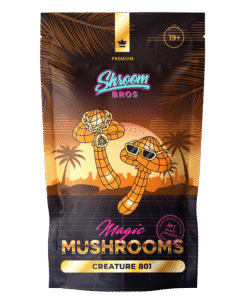
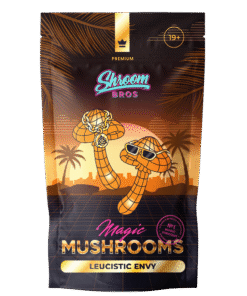
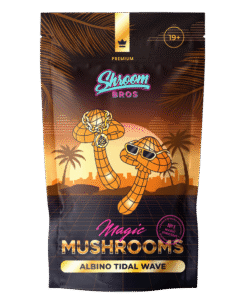
If you came to this guide while shopping rather than researching, these are the listings on Shroom Bros Official that most people open next. Every listing publishes weight per package, pieces per package, full ingredients and allergen notes, so you can compare like for like instead of guessing from a product photo.
How ordering works at Shroom Bros Official
Ordering is deliberately simple, and the rules are the same on every product page. Orders must reach a $100 minimum before checkout unlocks — the cart tells you how far away you are, and adding a second item is usually cheaper per gram than paying for two separate shipments. Two payment methods are accepted: Interac e-Transfer and cryptocurrency. Choosing the cryptocurrency option applies an automatic 20% discount to the order total, with no coupon code to type and no minimum beyond the standard one. The discount line appears in the order summary the moment the payment method is selected, so nothing is hidden until after you have paid.
Shipping is flat-rate and Canada-wide: $20 flexible shipping or $30 express/overnight. Parcels leave in plain outer packaging with no branding on the label, and tracking is emailed as soon as the package is scanned. If a code is running, it will be published on our coupon page and nowhere else — third-party coupon aggregators republish expired promotions indefinitely.

How to compare products properly
- Compare by weight, not by price. A cheaper package with less material in it is not cheaper.
- Read the portion count. A scored bar with twelve squares and a bar with four squares are very different products even at the same total weight.
- Check the ingredients. Allergens, sugar alcohols and dairy matter, and they are listed on every one of our pages.
- Check storage guidance. Chocolate suffers in heat, gummies dry out once opened, and dried material keeps best cool, dark and sealed.
- Buy small first. Trying one package before committing to a bundle costs less than replacing something you dislike.
Storage, labelling and household safety
Anything that looks like food belongs in a labelled, sealed, child-resistant container, stored somewhere children, guests and pets cannot reach. Never decant products into an unmarked candy jar or a kitchen cupboard shared with everyday snacks — the overwhelming majority of accidental-ingestion cases reported to poison centres involve edibles that were stored casually. Keep the original packaging so the weight and ingredient information stays with the product, and write the purchase date on it. Cool, dark and dry is the rule for every format we sell.
Responsible-use notes
This article is educational. It is not medical advice, and it is not encouragement to use anything. Psilocybin is a controlled substance in Canada outside of authorised clinical, research and special-access contexts. Anyone taking prescription medication — particularly SSRIs, SNRIs, MAOIs, lithium or antipsychotics — anyone with a personal or family history of psychosis or bipolar disorder, and anyone who is pregnant or breastfeeding should speak with a physician rather than relying on internet guidance. If you or someone else is in distress, contact a local health line or emergency services.
Delivery across Canada: what to expect
Every order ships from within Canada, tracked, in plain outer packaging with no branding printed on the label. Transit time depends far more on distance and weather than on the courier’s marketing copy. Southern Ontario, Montreal, Ottawa and the Greater Vancouver area are typically the fastest lanes. The Prairies and Atlantic Canada usually add a day. Northern and remote postal codes take longest, and winter storms can add several days to any route — a delay of a day or two in January is a weather event, not a lost parcel.
Tracking is emailed the moment the parcel is scanned into the network. If tracking has not updated for two business days, contact support with your order number before assuming anything has gone wrong; the overwhelming majority of “missing” parcels are scanning gaps rather than genuine losses. Where possible, use an address where somebody can bring the package inside — chocolate in particular does not enjoy an afternoon on a hot porch or a sub-zero doorstep.

Glossary of terms used in this guide
- Psilocybin — the compound found in Psilocybe mushrooms; the body converts it into psilocin.
- Psilocin — the active metabolite responsible for the effects people describe.
- Cubensis — Psilocybe cubensis, the species behind most named varieties sold commercially.
- Strain or variety — a cultivated lineage within a species. In an unregulated market, strain names are descriptions, not verified guarantees.
- Microdose — a sub-perceptual amount taken on a repeating schedule.
- Tolerance — reduced sensitivity after a recent experience; it builds quickly and fades over roughly one to two weeks.
- Cross-tolerance — tolerance carrying over between substances that share a receptor target.
- Set and setting — your mental state and your physical and social environment; both change outcomes more than most people expect.
- Integration — the process of making sense of an experience afterwards, usually through writing or conversation.
- Bloom — the harmless pale film that appears on chocolate stored too warm.
Keep reading
- All Shroom Bros Official guides
- Browse the full shop by category
- Mushroom chocolate bars and chocolate mushrooms
- Current Shroom Bros coupon code
- Shroom Bros Official homepage
How to evaluate information about The Mystery Solved: Why Magic Mushrooms Turn Blue
Online discussions often mix personal reports, commercial claims, laboratory research and second-hand summaries as though they carry equal weight. They do not. A useful first step is to identify what kind of statement you are reading. A controlled human study can answer a narrow question under defined conditions. An observational survey can reveal patterns but cannot prove cause and effect. A personal account can describe one person’s experience, yet it cannot predict what another person will feel. Product copy can explain format and ingredients, but it should never be treated as independent medical evidence.
Dates matter as well. Psychedelic research is moving quickly, while regulations, clinical access and public-health guidance vary by province and can change. Prefer sources that show an author, publication date, methodology and links to the underlying evidence. When an article quotes a study, open the study and check whether the participants, dose, setting and outcome actually match the claim. A headline about supervised clinical care does not automatically apply to unsupervised use, and a result in a small trial should not be presented as settled guidance for everyone.
A practical source-checking checklist
- Look for the original paper, health-agency page or professional guideline rather than a chain of summaries.
- Check the sample size and whether the study involved humans, animals or cells.
- Separate measured outcomes from participants’ self-reported impressions.
- Notice whether preparation, supervision and follow-up were part of the setting.
- Check conflicts of interest and whether a seller is making an unsupported health claim.
- Compare publication dates and look for a newer review that includes several studies.
Planning before making any decision
Good preparation starts before a product is opened. Write down what you are trying to understand, why the timing matters and what responsibilities must remain protected. Work, driving, childcare, medication schedules and mental-health history are not side notes. They are central parts of a risk assessment. If the plan depends on hiding impairment, rushing a delivery, skipping prescribed medication or being responsible for another person, the safest answer is to postpone it.
Environment deserves the same attention. A calm familiar place, access to water, a charged phone and a trusted sober support person provide more protection than decorative details. Remove avoidable stressors, secure car keys, decide in advance who can be contacted, and avoid mixing substances. Clear plans reduce the temptation to improvise during a period when judgement may be altered. People with a personal or family history of psychosis or bipolar disorder need particular caution and should seek qualified medical advice.

Understanding labels, formats and portions
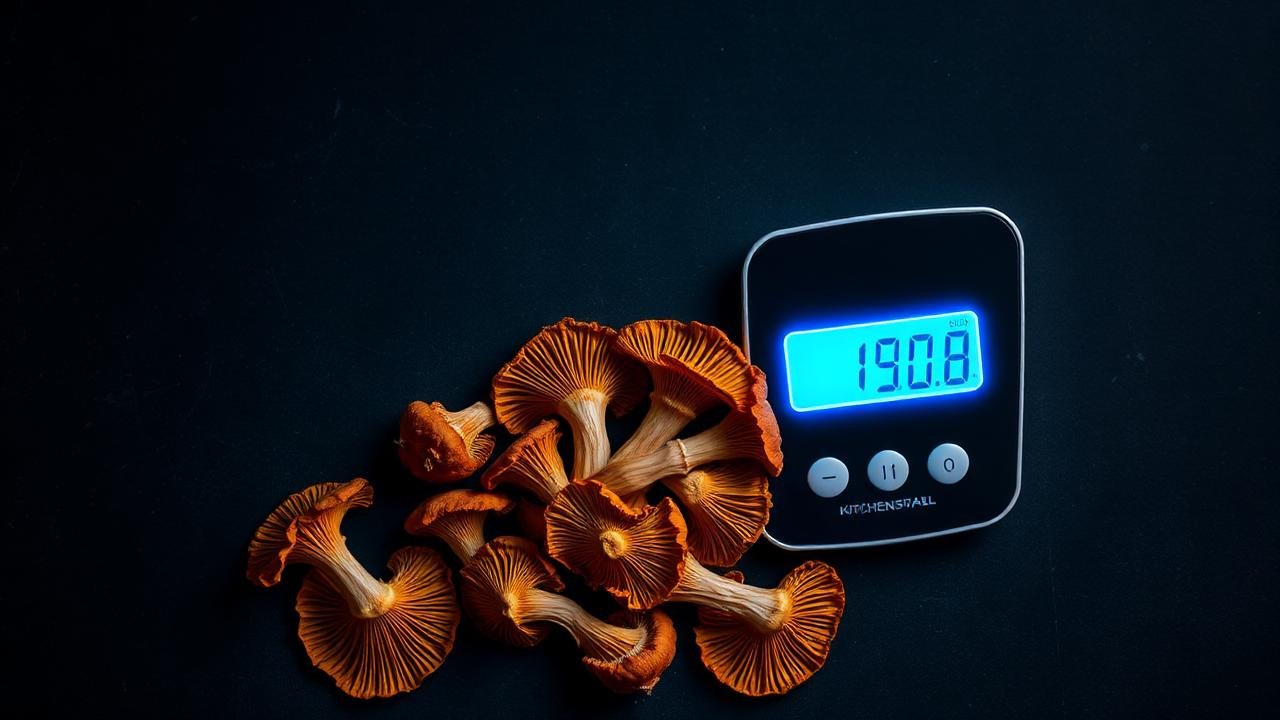
Two packages with similar branding can contain very different quantities, ingredients and serving structures. Read the total package weight, the number of pieces and the stated amount per piece separately. A number printed on the front may refer to the whole package rather than one square or gummy. When that distinction is unclear, do not guess. Keep the original label and use a precise scale for dried material rather than estimating by appearance; density, moisture and fragment size make visual comparisons unreliable.
Format changes timing and convenience, not the need for caution. Chocolate and gummies resemble ordinary food and therefore require locked, labelled storage. Capsules conceal flavour but can also conceal the material inside, making transparent ingredient information especially important. Tea may feel different because the material is prepared differently, while a recent meal can alter onset. None of these formats makes an unknown amount predictable. Avoid stacking formats simply because the first one has not produced an immediate effect.
Questions worth answering before checkout
- What is the total quantity and what is the amount per piece?
- Are all ingredients and common allergens listed?
- Is there a batch or best-before reference?
- Can the package be resealed and stored away from children and pets?
- Does the seller publish clear contact, shipping and refund information?
- Are claims presented as factual product details rather than medical promises?
Keeping a useful personal record
A short factual record is more useful than relying on memory. Note the date, product format, label information, meal timing, sleep, other substances, general mood and the start and end of noticeable effects. The purpose is not to chase an ideal experience. It is to notice uncertainty, identify unwanted patterns and avoid accidental repetition. Record observations in plain language rather than deciding immediately what they mean.
Review notes only after enough time has passed for sleep and routine to return to normal. A single experience cannot establish a trend, and positive expectations can shape interpretation. If the record shows escalating frequency, repeated anxiety, disrupted sleep, financial strain or difficulty meeting responsibilities, stop and seek support. No blog, calculator or community protocol can replace an individual assessment from a qualified clinician.
What to do when an experience becomes difficult
Reduce stimulation first. Move to a quieter familiar space, sit or lie somewhere safe, slow the pace of conversation and remind the person that the effects are temporary. A sober support person should stay calm, avoid arguing about perceptions and focus on immediate needs such as breathing, temperature and preventing falls. Do not drive, wander into public places or add alcohol or cannabis in an attempt to change the experience.
Call emergency services when there is chest pain, a seizure, loss of consciousness, severe overheating, trouble breathing, dangerous behaviour, persistent confusion, or a credible risk of harm. Tell responders what may have been taken and when; accurate information helps treatment. Poison-control services can also provide region-specific guidance. After a frightening event, allow time for rest and speak with a health professional if anxiety, insomnia, low mood or perceptual changes continue.
Frequently overlooked details
Why does onset vary?
Food, formulation, individual metabolism and expectations all influence perceived timing. A slow onset is not proof that a product is inactive, which is why impatient redosing creates avoidable risk.
Does a familiar product guarantee the same result?
No. Storage, batch variation, sleep, stress, medication and setting can all change an experience. Familiar packaging should not be treated as a guarantee of identical effects.
Can an online calculator provide a safe personal amount?
A calculator can only apply a formula to the values entered. It cannot verify potency, health history, medication interactions or the surrounding environment, so it should never be treated as medical clearance.
Why keep packaging after opening?
The label preserves ingredient, quantity and contact information. It is also useful if a health professional or poison-control specialist needs to understand what was consumed.
When should someone ask a professional?
Ask before making a decision when prescription medication, pregnancy, a serious medical condition, a history of mania or psychosis, or persistent mental-health symptoms are involved. Seek urgent help for severe or dangerous symptoms.